


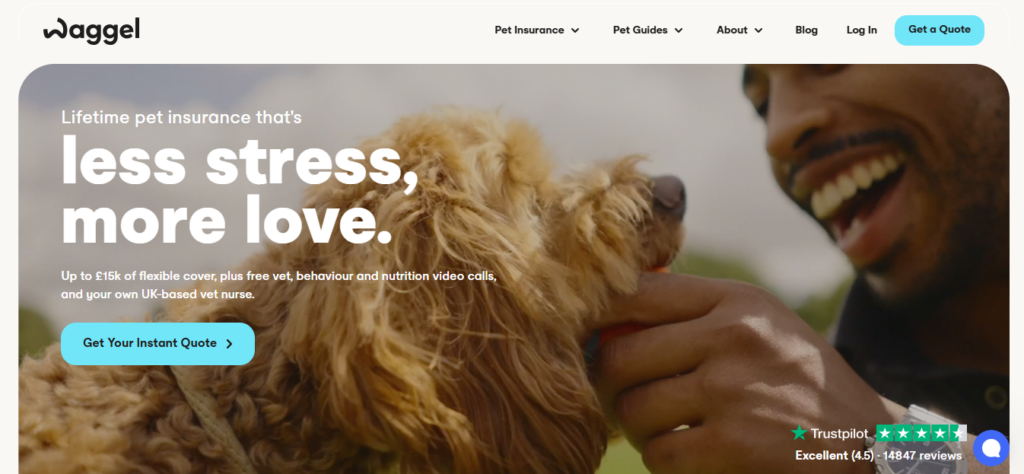
Waggel Lifetime Pet Insurance is designed for UK pet owners who want financial protection against eligible veterinary expenses throughout their animals’ lives. The policy focuses on accidents, injuries, illnesses and certain additional treatments, with coverage structured around an annual financial limit that refreshes when the policy renews. This arrangement is particularly relevant when a dog or cat develops a condition that requires treatment over an extended period. Rather than relying on a single fixed allowance for a condition throughout its lifetime, Waggel provides a renewed annual allowance, provided the policy remains active and the treatment continues to satisfy its terms. Owners can select an annual cover level of up to £15,000, depending on the available policy options, and adjust their chosen limit and excess at renewal. The product also incorporates specific allowances for dental, complementary and behavioural treatments, alongside access to online veterinary support and a designated UK-based veterinary nurse..
Waggel Lifetime Cover and Continuing Medical Conditions
The defining feature of Waggel Lifetime Pet Insurance is its annual renewal structure. When a policyholder renews and maintains uninterrupted cover, the selected annual limit refreshes for the next policy year. This arrangement can be important for animals diagnosed with chronic or recurring illnesses, because treatment may involve repeated consultations, diagnostic investigations, medication and monitoring. For example, a cat with an ongoing condition might require veterinary assessments throughout several years, while a dog could need continuing management following the diagnosis of a long-term illness. Subject to the policy terms, eligible treatment costs can remain claimable across successive policy years instead of being restricted to one lifetime allowance for that condition. Nevertheless, the annual limit applies to the total eligible veterinary expenses covered during the relevant policy year, rather than providing an unlimited budget for each illness. If the available allowance is exhausted, additional treatment costs cannot be claimed under that limit during the same year.
Waggel Annual Limits, Excess and Financial Planning
Waggel allows policyholders to choose an annual veterinary cover limit and an excess, also described by the provider as a claim contribution. The available annual limit can reach £15,000, although the options offered to an individual customer depend on the policy quotation and applicable eligibility requirements. The annual limit represents the maximum amount available for eligible veterinary bills during the policy year; it should not be interpreted as a separate allowance for every illness. Waggel’s published policy information also identifies smaller limits for particular treatment categories, meaning that the amount available for a specific service may be lower than the headline figure. The excess represents the portion of eligible treatment costs that the policyholder must contribute for each unique condition during the policy year. According to Waggel’s limits guidance, this contribution applies per condition and resets at renewal. The company also gives customers the option of a 20% co-payment on new policies or at renewal. This is an additional percentage contribution towards eligible claim costs, on top of the standard excess, and customers should understand its financial effect before selecting it.
Waggel Veterinary Benefits Beyond Standard Medical Bills

Waggel’s insurance includes several additional benefits alongside eligible veterinary expenses associated with accidents, injuries and illnesses. Dental treatment, complementary treatment and behavioural treatment each have a published sub-limit of £1,000 per policy year. These allowances sit within the selected annual limit, rather than being added to it. Consequently, an owner with a £5,000 annual limit does not receive an additional £3,000 solely because all three categories are available. Each category remains subject to its own eligibility conditions and the policy wording. Dental cover can apply to eligible treatment following dental accidents or illness, including certain procedures recommended by a veterinary professional. Complementary treatment may help with eligible therapies when the policy conditions are met, while behavioural treatment can support qualifying interventions addressing an animal’s behavioural difficulties. These provisions are separate from routine maintenance and do not make every preventative service or alternative therapy claimable.
Waggel Dental Cover and Veterinary Health Requirements
Dental treatment is a distinct part of Waggel’s lifetime insurance, with up to £1,000 available per policy year for eligible dental accidents and illnesses. This allowance is subject to the overall annual limit and is not intended to reimburse every cost associated with maintaining an animal’s oral health. Waggel specifies requirements designed to establish that dental problems receive appropriate veterinary attention. A vet must have examined the pet’s teeth within the previous 12 months, with the examination recorded in the animal’s medical notes, and regular annual checks must continue. When a vet recommends treatment, the procedure must generally be completed within three months of that recommendation for the claim to qualify. These requirements make the maintenance of veterinary records particularly important. An owner may need to provide documentation demonstrating when an examination occurred, what the vet identified and which treatment was recommended. Waggel distinguishes medically necessary dental treatment from routine or preventative care.
Waggel Online Veterinary Support and Customer Assistance
Waggel combines its insurance policy with access to services intended to help members manage everyday questions about pet health and care. The provider advertises free online veterinary video calls, behavioural consultations and nutrition consultations through its membership platform. These services offer a way for owners to discuss relevant concerns remotely and obtain guidance without automatically arranging an in-person appointment for every question. Their usefulness depends on the nature of the concern, the professional’s assessment and whether a physical examination or diagnostic investigation is necessary. Online consultations should not be interpreted as a replacement for emergency veterinary treatment or hands-on clinical assessment when these are required. Waggel also states that each member is assigned a Customer Champion who is a UK-based qualified veterinary nurse. This contact is intended to help with service questions, explain aspects of the insurance process and provide assistance when customers need guidance about claims. The arrangement places customer support alongside financial cover, rather than limiting the relationship to submitting veterinary bills.
Waggel Eligibility, Waiting Periods and Exclusions

Understanding what Waggel does not cover is as important as understanding its advertised benefits. The insurer identifies the first 14 days of a policy as a warm-up period during which treatment costs are generally not covered. For dogs, third-party liability is an exception to this waiting-period restriction, subject to the applicable terms. Conditions or symptoms that existed before cover began, as well as those arising during the warm-up period, can be treated as pre-existing and excluded from subsequent claims. This distinction can affect owners who arrange insurance only after noticing a health problem or receiving an initial veterinary assessment. Waggel also excludes routine, elective and preventative services such as grooming, neutering, flea and worm treatments, and dental maintenance that does not qualify as treatment for an illness. Some advanced procedures and other specific expenses are excluded under its published policy information. Prescription food and blankets are among the expenses identified as not covered, while purchase-price and liability benefits have their own restrictions.
Waggel Policy Selection and Long-Term Pet Care Planning
Choosing Waggel Lifetime Pet Insurance involves considering an animal’s age, medical history, likely care requirements and the household’s ability to meet unexpected veterinary expenses. Owners can begin by estimating the level of annual cover they would want available if their pet required diagnostic tests, medication, surgery or continuing treatment. They should then examine the excess and decide whether an optional co-payment would suit their financial circumstances. A higher headline annual limit may provide a larger potential allowance, but its practical value depends on the premium, the treatment categories covered and the exclusions that apply. Owners of animals with existing symptoms or previous diagnoses should pay particular attention to pre-existing-condition rules, since purchasing a new policy does not ordinarily make an existing problem eligible for reimbursement. The same consideration applies when switching insurers: an illness covered under an existing arrangement may not qualify under a replacement policy.